
Beyond Borders: The Ticuna People at the Center of the Human and Legal Debate
Synopsis
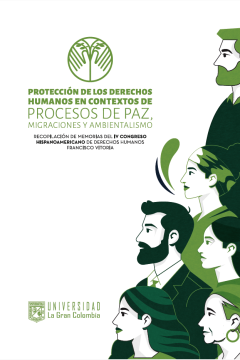
The Ticuna community, one of the largest indigenous peoples in the Amazon basin, has traditionally inhabited territories that today span three nations: Colombia, Peru, and Brazil. This transboundary reality challenges the rigidity of political borders and highlights the tension between state regulatory frameworks and indigenous collective rights, particularly regarding territory, autonomy, and recognition of identity. The purpose of this research is to analyze and compare the constitutional, legal, and jurisprudential frameworks governing the rights of indigenous peoples in the three aforementioned countries, using the Ticuna as a case study. To this end, a qualitative socio-legal methodology is employed, supported by normative analysis techniques, documentary review, and interviews with key stakeholders. Both progress and limitations are identified in the recognition of collective rights, the application of prior consultation, and the guarantee of indigenous territoriality. Despite formal advances, a disconnect persists between normative recognition and the effective implementation of rights. The research concludes that it is urgent to move toward approaches to cross-border governance and coordinated mechanisms for intercultural legal protection that recognize the integral nature of the territory and the normative systems specific to peoples such as the Ticuna.
Volume
Pages
Published
Series
Categories
License

This work is licensed under a Creative Commons Attribution-NonCommercial-ShareAlike 4.0 International License.