
Forgiveness as an Unpaid Debt: Vitoria, Cultural Violence, and the Limits of Reconciliation in Colombia
Synopsis
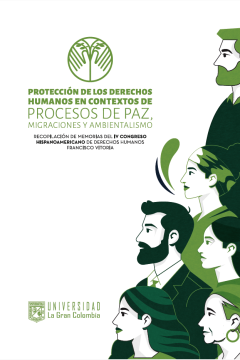
This study examines the barriers to reconciliation in Colombia's peace process, grounding its analysis in the thought of Francisco de Vitoria (1483-1546), the Salamancan theologian and jurist whose Relectiones De Indis and De Iure Belli represent the first systematic attempt to establish an international law founded on the universal dignity of the human person. The argument presented here is that violence in Colombia is neither an isolated nor a recent phenomenon, but rather a deeply rooted cultural reality that has shaped society to the point of becoming normalized in everyday life. Based on this analysis, a key question arises: Can forgiveness serve as a viable mechanism for reconciliation in a society where violence is not an aberration, but a structural condition? To address this, the article engages with three philosophers who have grappled with the inherent impossibility of forgiveness: Paul Ricœur, who identifies an irreducible gap between wrongdoing and pardon; Vladimir Jankélévitch, who describes forgiveness as an endeavor that, in some cases, "pushes us to the very limits of our strength"; and Jacques Derrida, whose paradox holds that true forgiveness is only conceivable in the face of the unforgivable. The Vitorian tradition, rooted in the recognition of the dignity of conquered peoples and the establishment of ius gentium as a universal normative framework, provides a philosophical foundation for both the 2016 Final Peace Agreement and the Special Jurisdiction for Peace. Yet it is the unresolved question of forgiveness that exposes how much of this historical debt remains outstanding.
Volume
Pages
Published
Series
Categories
License

This work is licensed under a Creative Commons Attribution-NonCommercial-ShareAlike 4.0 International License.